Thursday, May 3, 2012

Irish Sitar


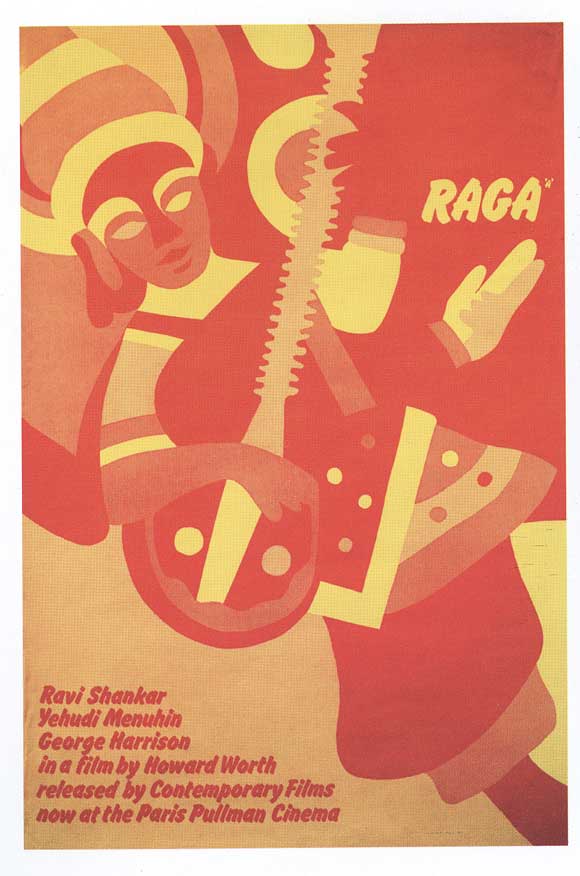
November 1971 was the month of Beatle-related movies, as 200 Motels opened in New York on the 10th, Blindman premiered in Rome on the 15th, and Raga had a special screening at Carnegie Hall on the 22nd, attended by George and John and their wives.

George was in New York all month, editing the film of the Bangla Desh concert and promoting the Raga movie and soundtrack LP. Near the beginning of November (it's introduced as the 7th, but a comment by George places it nearer the 1st), he dropped by WPLJ's studios and talked with Alex Bennett about Ravi Shankar and Indian music in general, as well as his experiences recording Wonderwall in Bombay.

Meanwhile, John and Yoko were entering the "activist/protest music" phase of their career, spurred on by meetings with Jerry Rubin and Abbie Hoffman. As well as producing an album by street musician David Peel, John was writing songs about the Attica prison riot, the jailings of Black Panther Angela Davis and White Panther John Sinclair, and the situation in Northern Ireland.

On November 12th, filmmaker John Reilly videotaped John and Yoko in their Bank Street apartment, working on a new song, "The Luck Of The Irish":


Early versions of "Attica State" and "The Luck Of The Irish" were apparently recorded in the fall of '71 for possible release as a single, or even as part of an LP containing the live Lyceum and Fillmore East concerts. In the end, both numbers were redone during the early 1972 Sometime In New York City sessions with Phil Spector.

Wednesday, May 2, 2012

Straight Babies


As soon as Ram was released, Paul was already considering his next step, and with the thought of going back on the road, he decided to form a permanent band. Beginning with Linda (for moral support more than her rudimentary keyboard skills), Paul retained drummer Denny Seiwell from the Ram session band, and called upon ex-Moody Blues guitarist Denny Laine.

The new group assembled at Abbey Road in August, 1971 to record their debut album, with Paul deliberately keeping the atmosphere loose and undisciplined. The result was perhaps his slightest solo album, Wild Life, containing a Ram leftover ("Dear Friend"), two lengthy jams ("Mumbo" and "Love Is Strange"), a throwaway nonsense ditty ("Bip Bop"), two short instrumental links, and four actual new compositions.

Around the time his and Linda's second child Stella was born (September 13th), Paul devised a name for the band: Wings. He introduced Wings at a launch party on November 8th at the Empire Ballroom in London. Two days later, a Wild Life listening session was held at Abbey Road for members of the press.

One of the reporters, Melody Maker's Chris Charlesworth, taped an interview that day, and rather than introducing his new band and their LP, Paul chose to unload a year's worth of stored resentment at the way Allen Klein and his ex-bandmates had been portraying him since the dissolution lawsuit had begun.

Paul had undoubtedly been hurt by John's song "How Do You Sleep" (on Imagine), and responded to its charges that he hadn't done anything worthwhile since "Yesterday". John had actually written that song partly in response to Paul's veiled attack on him and Yoko in "Too Many People" (on Ram), as he explains in this excerpt from the October 25th David Wigg interview (inadvertantly omitted from the earlier blog post).

In any case, the sniping continued, for after the Melody Maker article was published November 20th, John fired off a point-by-point rebuttal/attack, which was printed in the December 4th issue.

All Paul really wanted at this point was to be rid of Klein's management and set off on his own career, something which he stressed in another November interview with Record Mirror's Mike Hennessy.

Tuesday, May 1, 2012

It's Nothing Important


With their duties in Syracuse finished, John and Yoko returned to their suite at the St. Regis in New York City. On October 25th, they were interviewed there by David Wigg for BBC Radio's Scene And Heard, broadcast over three weeks in November. Here is a 17-minute composite from two separate broadcasts and the raw tape (as released in 1976 on The Beatles Tapes With David Wigg).

John and Yoko went back into the studio with Phil Spector on October 28th, recording their next single at the Record Plant, as well as mixing the live recording with Frank Zappa's band from June. "Happy Xmas (War Is Over)" was released as a single in the US on December 6th, probably too late to take advantage of Christmas airplay, as it failed to chart. It didn't even come out in the UK until the following year, but has grown to become a holiday standard:


During the first week of November, John and Yoko moved out of the St. Regis and into an apartment on Bank Street in Greenwich Village. One of their first visitors was reporter Don Singleton, who was preparing a profile on Yoko for the Daily News. As part of his research, he spoke to John at length (and very candidly and profanely) about the Syracuse exhibit and Yoko's standing in the art world, while builders worked in the background.


Monday, April 30, 2012

This Is Not Here


Yoko Ono's art exhibition, This Is Not Here, occupied the entire Everson Museum at Syracuse University from October 9th (John's 31st birthday) through the 27th, 1971. John and Yoko, along with museum director Jim Harithas, held a press conference at the Hotel Syracuse on October 5th to promote the event.

Yoko also gave some remarks and fielded questions at the museum on October 8th, the day prior to the opening. The next day, John looked on like a proud parent as the crowds explored and participated in Yoko's pieces.

Late that night, John's birthday was celebrated with a singalong party in their suite at the Hotel Syracuse, attended by Ringo and Maureen Starr, Phil Spector, Klaus Voormann, Allan Ginsberg, and Jonas Mekas, who shot a bit of footage:


John, Yoko, and Mekas participated in a bizarre (even by their standards) television show a few days later, apparently to promote the gallery show. Taped October 14th at a Syracuse TV studio, the program was 64 minutes of television without form or narrative, consisting of audience participation pieces culled from Yoko's career, extracts of her films, and exercises from Grapefruit, all tossed together in a surreal fashion. The result was aired on the WNET (public TV) series Free Time, to the bafflement of all:


Thursday, April 19, 2012

Get It On And Rip It Off


Yoko's Fly LP was accompanied by a single, released September 29th, 1971 in the US, which paired two surprisingly conventional numbers from the album: the ballad "Mrs. Lennon" and the rocker "Midsummer New York".

She promoted the new releases in an interview at the St. Regis with WNEW-FM's Scott Muni, who had been interviewing John and his cohorts since their first New York visit in 1964. The first half of the interview is largely devoted to Yoko, but John participates, and takes a larger role in the second half. (Unfortunately, the circulating tape was dubbed on a machine with dying batteries, and speeds up dramatically as it reaches the end).

One of John and Yoko's final film projects was produced in their hotel suite that month. Titled Clock, in best Warhol fashion, it consisted of a one-hour continuous shot of the face of an alarm clock. Its only redeeming factor would have been the soundtrack, consisting of John singing Buddy Holly tunes and other oldies while strumming an acoustic guitar.

Perhaps the film's only screening (no copy circulates at present) was during Yoko's first major American art exhibition, in October at the Everson Museum in Syracuse, NY. John and Yoko talked about the preparations for that event to their old pal Howard Smith of WPLJ radio. The interview also found John defending himself against a number of attacks, both real and perceived, ranging from a letter in the Village Voice, to the lyrics of Ram, to George Martin, of all people!


Wednesday, April 18, 2012

What You Gonna Do Now?


Ringo Starr spent the summer of 1971 in Spain and Italy, co-starring in the ABKCO-produced spaghetti western, Blindman. Ringo played the role of a bandito named Candy, which just happened to be the title of an earlier Ringo movie.

The film premiered in Rome November 15th, 1971 and trickled into theatres worldwide over the next year or so, to poor reviews and minimal attendance. Ringo's only attempt at promoting the film was to compose a dreadful song, "Blindman", and sneak it out on the B-side of "Back Off Boogaloo" in the spring of 1972.


Apart from appearing at the Concert for Bangla Desh, Ringo's other major project that summer was the launching of a home furnishing design company, ROR Ltd., with partner Robin Cruikshank. The duo exhibited their wares that September at Liberty's department store, and Ringo recorded a message promoting the event. He also appeared on the BBC children's show Blue Peter September 16th to show off some of their steel and glass pieces (this footage survives but isn't circulating widely).

Tuesday, April 17, 2012

Betty Rollin's Legs


Once they settled into their suite at the St. Regis Hotel in New York City, John and Yoko wasted no time hitting the promotional circuit. The Imagine LP was released in the US on September 7th, 1971, with Yoko's companion album, Fly, coming out later that month.

On September 2nd, John and Yoko were interviewed by a Japanese journalist about their new releases. With Yoko translating the queries and responses, the 20-minute recording has a minimum of Lennon content, but listen out for his Kabuki impression at the very end!

September 6th found visitors to the St. Regis suite, including George Harrison and Dick Cavett, stepping in front of the camera for the Imagine companion film. Cavett was there to meet the couple prior to interviewing them on his ABC talk show.

The conversation, videotaped September 8th, turned out to be one of John's most entertaining television appearances, and as such over-ran the 90-minute time slot. John and Yoko took up the whole show on September 21st, and a further 25 minutes of leftover material was slotted in on the 24th:


Another early September guest at the St. Regis was writer Peter McCabe, who was working (with Robert Schonfeld) on a book about the dismantling of The Beatles' financial empire, Apple To The Core. Highlights of McCabe's four-hour conversation with John were aired in a 1984 radio special which coincided with the publication of a book containing the full interview, John Lennon: For The Record.


Monday, April 16, 2012

1971 Beatleg Roundup


One of the more notable early Beatlegs appeared in August, 1971 on the Trademark Of Quality label. Yellow Matter Custard was the first of a plethora of titles to include Beatles BBC Radio performances - in this case, an exciting mixture of tunes from Pop Go The Beatles otherwise unreleased by the group (apart from "Slow Down"). Most purchasers probably had no clue about the source of the recordings, and even John Lennon assumed them to be Decca audition tapes when presented with the album later that year.

Other Beatlegs from 1971 covered the by-now familiar "Get Back" acetates (Let It Be - Live), the Let It Be film soundtrack (More Get Back Session), the Hollywood Bowl concert (Shea The Good Old Days), the Shea Stadium concert (Last Live Show), and the Fan Club flexis (Complete Christmas Collection 1963-1969). And the cannibalization had begun: one album paired half of Last Live Show with half of a Rolling Stones bootleg (Battle)!

Sunday, April 15, 2012

Save Us From The Queen


In August, 1971, John Lennon spent his final days in England completing filming of Imagine and lending his name to a couple of causes.

Most conspicuous was his support of Oz magazine, whose editors were being prosecuted under the Obscene Publications Act. John had composed a song, "God Save Oz", recording a demo in April and then producing an Apple single in May, performed by the "Elastic Oz Band" and released as "God Save Us" in July. John and Yoko recorded a quick promo to plug the song for radio play.

On August 5th, a verdict of guilty was handed down for all three defendants, along with a prison sentence (later overturned on appeal). John and Yoko wasted no time in taping a message of support the following day, for airing on pirate station Radio Free London.

On August 11th, John and Yoko joined a protest march in London, not only against the sentences but the British government's recent arrest and internment of 342 people suspected of having ties to the IRA. Both spoke to reporters about their reasons for marching, with John's reply unwittingly sowing the seeds of a future song.

August 12th, 1971 may have been John's final day in his native country. According to his tape archive, he spent part of it with Yoko reading selections from her book Grapefruit, although the recording more likely stems from July, when they were heavily promoting the republication.

Friday, April 13, 2012

Help Us Save Some Lives


One of the highlights of George Harrison's solo career, the Concert for Bangla Desh went from chance remark to superstar benefit in just over a month. In late June, 1971, George was in Los Angeles working with Ravi Shankar on the soundtrack for the long-delayed documentary Raga. Ravi lamented to George about the war occurring in Bangladesh and causing thousands of starving refugees to flood into India from East Pakistan.

George immediately agreed to call attention to the issue by composing a song, "Bangla Desh", hastily recorded and released as a single by the end of July. More importantly, he began rounding up every musical friend he could think of to perform at a charity concert in New York.

Madison Square Garden was booked for two shows on August 1st, and an amazing lineup was assembled, with Ravi himself opening the show and George leading an all-star band including many of the people who had contributed to All Things Must Pass: Ringo, Eric Clapton, Jim Keltner, Billy Preston, Badfinger, Leon Russell, Klaus Voormann, Carl Radle, and of course Phil Spector, recording the show from a mobile unit outside the Garden.

George and Ravi held a press conference at Allen Klein's ABKCO office on Broadway July 27th, explaining the reasons for the concert and the planned album and film, which would generate the bulk of the revenue to be sent as relief aid. Most of the band had only that week prior to the Sunday shows to rehearse, and Eric Clapton didn't arrive until Saturday, with Jesse Ed Davis filling in during his absence (and joining the group onstage).

The already-stellar lineup was given a turbo boost when Bob Dylan, who hadn't toured in five years, agreed to participate, although nobody in the band was certain he would until the moment he walked onstage with his acoustic guitar and harmonica at the matinee performance.


Both concerts sold out almost immediately and raised $250,000, but despite George's press conference prediction of a 6-10 day turnaround for the album to be released, it wouldn't be out until December, with the film delayed even longer; more on that later.

Wednesday, April 11, 2012

The Greatest Book I've Ever Burned


John and Yoko spent early July, 1971 at the Record Plant East in New York, overdubbing and Mixing Imagine and recording tracks for Yoko's companion LP, Fly. They returned to England on July 14th and spent the rest of the month shooting scenes for the Imagine companion film and promoting new product such as the "God Save Us" single and a reissue of Yoko's book Grapefruit.

On the 17th, they taped an appearance for that evening's edition of the BBC1 chat show Parkinson. Host Michael Parkinson was game enough to conduct part of the interview from within a black bag (an experience which Eamonn Andrews and David Frost had earlier declined to participate in), but the line of questioning was decidedly stale.

After three years in the public eye with Yoko, and fresh from visiting freaks and artists in New York, John had to be frustrated spending this entire interview explaining his choice of partner and defending Yoko's concepts to a hostile British press. It's little wonder he would soon make America his permanent home.

Sometime in the latter half of July (possibly during a press day on the 20th), John was interviewed at Tittenhurst for BBC Radio's Scene And Heard. An atrocious off-air tape exists, mostly indecipherable, but topics include a progress update on Imagine, John's reasons for not participating in the upcoming Concert For Bangla Desh, and his opinion of Ram.

John also responds to a rumor published in Disc And Music Echo about a "lost" Beatles single called "Baby Jane" or "Maisy Jones". He assumes they are referring to "What's The New Mary Jane", and even sings a bit of it. If anyone has a better copy of this interview, or can understand more of what's being said, please let me know!

Tuesday, April 10, 2012

The Statue Of Liberty Said "Come"


On June 1st, 1971, John and Yoko landed at Kennedy Airport in New York, where they were met by Apple's Pete Bennett. They had been issued a two-week visa to enter the country in a continuing effort to track down Anthony and Kyoko Cox and settle the custody issue. With no work permit, John was technically not supposed to perform or record any music during his stay, but that turned out not to be the case.

Within a few days of arriving, John and Yoko had managed to make the acquaintance of several notorious radicals, such as Jerry Rubin and Abbie Hoffman, as well as street musician David Peel, in Greenwich Village. On the afternoon of June 6th, they appeared on WPLJ-FM with their old pal Howard Smith, producing a "happening" in which very little of substance actually happened. Imagine "Revolution 9" being performed live for two hours with audience participation in the form of callers, and you'll get the idea. Here is a 36-minute recording of "highlights" from the event.

Smith went from the radio studio to interviewing Frank Zappa in a hotel room, and brought John and Yoko with him. By the end of the conversation, it was decided that the couple should make a surprise appearance at Zappa and the Mothers' show that night at the Fillmore East. John acquitted himself well on an oldie, "Well (Baby Please Don't Go)", and joined in on Zappa's composition "King Kong", which was hijacked to become "Scumbag":


The performance was later released in differing edits on LPs by both Lennon and Zappa. Three nights later, John and Yoko were back on WPLJ radio, this time for a more conventional interview by Alex Bennett, once again taking calls from listeners (and with John having to step out briefly when overcome by nausea).

On June 12th, John and Yoko attended a party at Allen Klein's home, celebrating his wife Betty's birthday. Also attending were Andy Warhol, Miles Davis, Jack Nicholson, and filmmaker Jonas Mekas, who shot some footage:


Friday, April 6, 2012

How Do You Sheep?


In recent years, Paul McCartney's album Ram has grown in stature to become one of the most beloved by fans and respected by critics from his entire solo catalog. But that wasn't the case when the LP hit stores in May of 1971.

Ram sold well enough, topping the UK charts and peaking at #2 in the US (boosted by the #1 single, "Uncle Albert/Admiral Halsey"), but was a disappointment to many fans, and many rock critics tore Paul a new one when reviewing the album.

Paul didn't help matters by refusing to promote Ram at the time. He didn't have a touring band assembled yet, but he also didn't bother with any in-person TV or radio appearances or major print interviews. He and Linda did slap together a couple of home movies and set them to "3 Legs" and "Heart Of The Country" (neither of which were singles). These aired on Top Of The Pops June 24th:


Paul's major promotional idea was to smoke a giant bag of weed, compose an annoying jingle, ramble into a tape recorder, and edit the result together with sheep effects and snatches of Ram songs. He called the result Brung To Ewe By and sent it to undoubtedly puzzled disc jockeys in the form of a 12" disc containing 12 30-second and 3 60-second radio spots.

Other Ram spinoffs included the Muzak incarnation, Thrillington, and a dedicated mono mix of the LP for radio play. All the above plus session outtakes will be included in the upcoming Ram Deluxe package, due out near the album's 41st birthday.

Thursday, April 5, 2012

Comment Dormez-Vous?


John and Yoko spent much of April and May 1971 tracking down Yoko's ex-husband Tony Cox and her daughter Kyoko across the globe. Their travels took them to France, to Majorca, Spain (where the couple were taken into custody briefly after "abducting" Kyoko from her school playground), and to Trinidad and Tobago.

They eventually returned to France on May 14th, this time to attend the Cannes Film Festival, where their films Apotheosis and Fly were in competition. On the 15th, they were interviewed by Pål Bang-Hansen for Norwegian television:


On May 17th, José Arthur spoke with John and Yoko for the ORTF TV show Le Grand Amphi, broadcast June 12th. And at some point during their stay, they recorded an interview for French radio (which unfortunately means most of their responses were buried beneath French translations).

Meanwhile, back at Tittenhurst, recording for Imagine was ongoing, with Phil Spector once again producing, and George Harrison sitting in on a few songs. On May 28th, John and Yoko took a break to record (and film for their own archives) a lengthy interview for BBC Radio's Woman's Hour, on the topics of love and sex.

Monday, April 2, 2012

Growing All The Time


Ringo Starr spent the first week of February, 1971 at Pinewood Studios participating in the filming of Frank Zappa's 200 Motels, in which he portrayed a stylized version of the movie's writer/director/composer:


Ringo's first pop single, "It Don't Come Easy", was released April 9th in the UK and a week later in the US. It rocketed up the charts, peaking in the top 5 on both sides of the pond.

This led to a remarkable situation on April 24th, when all four ex-Beatles had songs in the Melody Maker top 30: "It Don't Come Easy" (#17), Paul's "Another Day" (#14), John's "Power To The People" (#18), and George's My Sweet Lord" hanging on at #28.

The initial promo for "It Don't Come Easy" was a homemade affair, assembled by Ringo from various clips dating back to 1967 and having nothing to do with the song. It was aired on Top Of The Pops April 22nd.

On April 27th, Ringo was in Norway, filming a guest spot on Cilla Black's TV special, Cilla In Scandinavia. Ringo's appearance on a ski slope found him singing the "Snowman Song" alongside Cilla and fox puppet Basil Brush:


While in Norway, Ringo also shot a second promo for "It Don't Come Easy", this time miming the lyrics in between schussing. This version was aired first on Top Of The Pops April 29th, and later as part of Cilla In Scandinavia, broadcast November 27th on BBC-TV.

Friday, March 30, 2012

So Sad


After spending most of 1970 in seclusion at home or in the studio, Paul McCartney found himself back in the headlines as 1971 began, thanks to the case he had filed attempting to dissolve The Beatles' partnership.

His first solo single (credited to Paul & Linda McCartney), "Another Day"/"Oh Woman, Oh Why", was released February 19th in the UK. That same day, he and Linda showed up at the opening day of hearings in the case, at London's High Court. Paul would testify in person on the 26th, and by March 12th, a ruling was made in his favour appointing an accountant, James Spooner, to manage all of the Beatles' assets until the partnership could be legally dissolved. This at least freed Paul from having Allen Klein control his financial destiny.

By then, Paul was in Los Angeles, putting the finishing touches on the Ram LP. He also made an unexpected appearance at the Grammy Awards on March 16th, accepting a trophy for Let It Be:


Meanwhile, John was spending February at his new home studio in Tittenhurst, testing the equipment and doing preliminary recording for the Imagine LP. The first fruit of these labors was the single "Power To The People", released March 8th in the UK. John did minimal promotion for the release, but did chat at home with Kenny Everett around the middle of the month for Radio Monte Carlo. As well as belatedly plugging the Plastic Ono Band LP, John danced his way around the subject of the court case, admitting that it had strengthened the bonds between him and George and Ringo.

Here is a fair quality off-line recording of the interview, broadcast at 1am on the morning of March 28th, as Radio Monte Carlo was about to shut down its English broadcasts for good. This is slightly longer and better quality than the version issued by Black Cat, but still pretty crummy.

Thursday, March 29, 2012

Let's Open The World


Proceedings in the case dissolving The Beatles & Company opened January 19th, 1971 in the London High Court. None of the group attended the earliest court dates, and only Paul would give testimony in person, the others submitting sworn affadavits.

While those in the media were left to speculate about how the money would be divided, John and Yoko got away from it all by traveling to Miami and then on to Japan, where John met Yoko's parents for the first time. They stayed at the Imperial Hotel in Tokyo, registering as "Mr. and Mrs. Gherkin".

While managing to duck reporters during most of their stay, they did agree to record a message for Japanese radio before checking out on January 25th. After plugging their new albums ("on Toshiba/Apple"), John answers a few questions about his music, with Yoko translating the queries and responses. The final ten minutes are entirely Yoko speaking in Japanese.

Wednesday, March 28, 2012

The Dream Is Over


Paul waited until the final day of 1970 to file suit against his erstwhile band members, beginning the interminable process of dissolving their business partnership and cementing his role as the "bad guy" in the Beatles' breakup story.

Meanwhile, their solo careers carried on, with Paul spending November and December in New York's Columbia Studios taping the basic tracks for his Ram LP. George was being showered with accolades for All Things Must Pass and "My Sweet Lord", both of which shot to the top of the charts by year's end.

On December 12th, during a break from filming Fly, John and Yoko were interviewed once again by Howard Smith for WABC radio. The conversation touched on many of the same topics as the Rolling Stone interview (John Lennon/Plastic Ono Band, the future of the Beatles, Primal Therapy), John was far more relaxed and less outrageous, perhaps because he knew it would be heard on the radio, or perhaps he had vented enough steam already.


Tuesday, March 27, 2012

Genius Is Pain


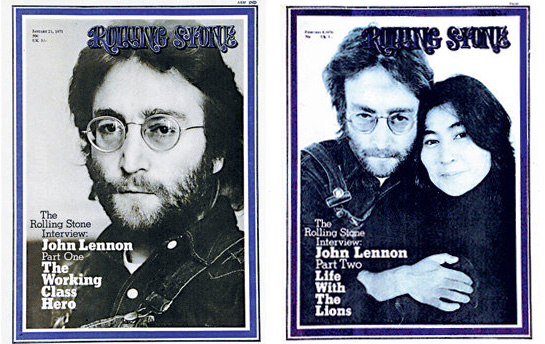
On December 1st, 1970, John and Yoko flew back to America, landing in New York where they would produce a pair of films, "Up Your Legs Forever" and "Fly". More notably, John promoted his new album, John Lennon/Plastic Ono Band, with a marathon interview for Rolling Stone magazine on December 8th.

The interview, conducted by Jann Wenner at ABKCO/Apple's Broadway offices, and given the cover story on the next two issues, was John's first since the Beatles' split, and more importantly his first since undergoing Primal Therapy and spilling out his version of the truth in the lyrics of his new songs. The soul-baring (and self-serving) conversation was soon compiled in a book, Lennon Remembers, but even that was censored to a degree and presented in jumbled form.

Here are the raw tapes of the complete four-hour-plus interview, divided into thirteen segments:


For those who want a more concise summary of the event, try this link.

Monday, March 26, 2012

Back Upon The Shelf


As the Beatles' split was very much 3 vs. 1, it's not surprising that all of the group but Paul continued to work together throughout 1970, particularly once John was back in the country in September.

George had spent all summer working with Phil Spector and dozens of musicians, including Ringo, on All Things Must Pass. He also produced and/or played on sessions for Billy Preston, Doris Troy, and Ashton, Gardner & Dyke. Ringo drummed on Stephen Stills's solo album, and recorded a single of his own, "It Don't Come Easy"/"Early 1970", with help from George and Stephen.

At the end of September, John began recording his own solo album, John Lennon/Plastic Ono Band at EMI. Behind the drum kit was Ringo, and behind the mixing desk for the latter part of the sessions was Phil Spector. When John turned 30 on October 9th, 1970, he was presented with tapes featuring birthday jingles and greetings from other artists, such as Donovan, Janis Joplin, Nina Simone, and Blossom Dearie.

George and the ATMP crew had recorded their own tribute, "It's Johnny's Birthday", the tune lifted wholesale from Cliff Richard's hit "Congratulations". And Ringo and company (including Stills, Preston, and POB bassist Klaus Voormann) refashioned "Johnny B. Goode" into "Happy Birthday John".

This spirit of camaraderie is evident on a recording from the night of October 9th, take four of "Remember", where John is having a blast recording with Ringo and Klaus; when the take is complete, George walks into the studio (he was next door mixing ATMP) and is greeted heartily by all present.

Thursday, March 22, 2012

In Concert At Whiskey Flat


Towards the end of 1970, vinyl Beatlegs not taken from one of the Get Back acetates (or pirated from singles) finally began to surface. Renaissance Minstrels Volume I included songs from the legendary Ed Sullivan shows (sadly, Volume II was just copied from an earlier LP, Homogenized Beatles). Then there was Shea The Good Old Days, lifted from the Shea Stadium TV special.

In October 1970, the nascent Trademark Of Quality label produced another rubber-stamped album with the intriguing title In Concert At Whiskey Flat. The source turned out to be a 1964 concert in Philadelphia, and along with the Hollywood Bowl recording, it was by far the highest-quality live Beatles performance available for the first few years of Beatlegging. It was soon duplicated on albums such as Live Concert At Wiskey Flats and In Atlanta Whiskey Flat.

- Twist And Shout
- You Can't Do That
- All My Loving
- She Loves You
- Things We Said Today
- Roll Over Beethoven

- Can't Buy Me Love
- If I Fell
- I Want To Hold Your Hand
- Boys
- A Hard Day's Night
- Long Tall Sally

Wednesday, March 21, 2012

Crazy With Nothing To Do


Like his 1968 pilgrimage to Rishikesh, John's four-month course of Primal Therapy in California may not have been spiritually rewarding in the long run, but it did produce a batch of new compositions of the highest quality.

During his stay from late April through early September, John recorded demos of new songs such as "Mother", "I Found Out", "Love", "God", "Well Well Well", "Look At Me", and "My Mummy's Dead". One such tape, from late July, contains several takes of "God", an unreleased song called "When A Boy Meets A Girl", and a "Poem Game" from Yoko.

Also possibly from the same period is a lengthy recording of John and Kyoko improvising songs and stories (some say it dates from the January 1970 Ålborg trip, but I find it unlikely John had a Rhythm Ace with him in Denmark).

Tuesday, March 20, 2012

Four Knights In Moscow


While John was busy Primaling in America, George spent the summer of 1970 recording the mammoth All Things Must Pass album at EMI and Trident Studios, and Paul remained at home with his family, composing songs for his next LP, Ram.

This left Ringo as perhaps the busiest Beatle that summer, at least in the public eye. He and Maureen attended a screening of the film Woodstock at the Cannes Film Festival on May 9th. After sitting in on some of George's early sessions, he flew to Nashville on June 22nd to record his second solo album, Beaucoups Of Blues. Nine days later, Ringo was back in England and the album was in the can; it was released in September to minimal success.

One of Ringo's neighbours and close friends in Highgate was Bee Gee Maurice Gibb, who had participated the previous year in a "Beatle outfake" recording, the notorious "Have You Heard The Word". Ringo and Maurice spent a few days around the end of August producing a short film for their own amusement. Who Goes There? features brief comedy vignettes in the vein of the Beatles' own Christmas messages of years past:


On October 1st, Ringo taped his second appearance on Cilla Black's BBC1 TV variety series, Cilla, acting in a skit and duetting on "Act Naturally". Although the videotape no longer exists, one fan recorded the audio portion as it was broadcast on February 13th, 1971.

Monday, March 19, 2012

An Intimate Bioscopic Experience


The profoundly anticlimactic film Let It Be premiered May 20th, 1970, simultaneously in London and Liverpool. None of the Beatles attended either British premiere, nor did John attend the American premiere on May 28th. Reviews and box office sales were lacklustre, although it won an Oscar for Best Original Song Score.

The movie was promoted by trailers and commercials of various lengths (60 seconds, 30 seconds, 15 seconds, and 10 seconds). United Artists also issued an unusual one-sided promo single, Dialogue From The Beatles' Motion Picture "Let It Be", which I can't imagine any station adding to its rotation. The final Beatles single, "The Long And Winding Road"/"For You Blue", was issued in the US May 11th and became their final #1 hit on Billboard by June.

BBC Radio aired two specials soon after the movie was released. The first, broadcast May 23rd and entitled Let It Be, examined not only the music from the film, but the group's now uncertain future. The June 27th edition of Film Time featured an interview with Dick Lester about all the Beatles' films, and included vintage 1964 Beatle chats from Movie-Go-Round.

Friday, March 16, 2012

Let It Be


This LP, on the Underground Sounds label, was probably compiled in the period between the release of McCartney (April 20th, 1970) and Let It Be (May 18th, 1970), as it lists the correct title for "Teddy Boy" but merely guesses at "For You Blue" ("Sweet And Lovely Girl"), "Two Of Us" ("On Our Way Back Home"), and "Dig A Pony" ("All I Want Is You").

The contents are lifted from another early Beatleg, Get Back To Toronto, minus a couple of tracks and supplemented by recent singles ("Instant Karma!" and "You Know My Name"). It's similar to another LP of the era, Homogenized Beatles.

- I've Got A Feeling
- Let It Be
- Don't Let Me Down
- For You Blue
- Get Back
- The Walk
- Christmas Time (Is Here Again)

- Teddy Boy
- Two Of Us
- Dig A Pony
- Instant Karma! (We All Shine On)
- You Know My Name (Look Up The Number)

Thursday, March 15, 2012

It's Really A Pity


On April 23rd, 1970, George and Derek Taylor flew to America for a 12-day visit, attending to business at Apple's newly-opened New York office on Broadway. George also dropped by Columbia Studios on May 1st to sit in on a recording session with Bob Dylan.

The following day, at the Apple office, George sat down with Village Voice reporter Howard Smith for a lengthy interview, aired on WPLJ radio. Naturally, the focus of the conversation was the future (or lack thereof) of the Beatles as a working group. George is surprisingly optimistic, refusing to rule anything out, while Smith remains skeptical that they will be able to repair the obvious rift between Paul and the others. After sharing his opinion on the McCartney LP, George reveals that he's preparing to begin recording his own solo album with Phil Spector in a few weeks.

John and Yoko had also planned to begin cutting an album with Spector that spring, but Primal Therapy with Arthur Janov effectively moved everything else in their lives to the back burner for a few months. They also flew to America on April 23rd, settling in Los Angeles where they would undergo a course of therapy that would keep them out of the spotlight through the spring and summer.

Meanwhile, the "Let It Be" single was topping charts around the world, promoted by a clip similar, but not identical to that seen in the movie Let It Be. In addition to airings on the UK's Top Of The Pops (March 5th) and Germany's Beat Club (March 28th), "Let It Be" also cropped up on the Australian series Hit Scene May 2nd, along with brief looks at the Wedding Album and Hey Jude LPs:


Wednesday, March 14, 2012

No Such Thing As An Ex-Beatle


The headline above, from the April 10th, 1970 edition of the Daily Mirror, marked the public demarcation of an estrangement which had been ongoing in private for several months. Paul had issued an information sheet with press copies of his McCartney album that contained some blunt statements about his feelings toward working with the other Beatles, and the media took this as a declaration of independence.

That same day, George was sitting down to film an interview with BBC1 for the religious series Fact Or Fantasy, broadcast on the 26th. Not only does George not refer to a split, he refers to himself as a Beatle during the conversation, mostly focused on spiritual enlightenment.

George's interview was filmed at Apple's Savile Row offices, where the usual Apple Scruffs and curious tourists were supplemented that day by dozens of reporters and photographers, as word of the Beatle breakup spread. CBS News dispatched Bob Simon of their London bureau to cover the story, and the raw footage of his report circulates. It begins with reaction from sad and angry Scruffs in the street (most of whom seem to blame Linda McCartney), and contains a lengthy interview with a shell-shocked (and frankly denial-ridden) Derek Taylor and his assistant Mavis Smith. At the end, Ringo is filmed leaving Apple and entering a car with Mal Evans, to the cheers of the fans outside.

Here are a couple of pertinent airchecks from April 1970: WKNR in Detroit bidding "a fond farewell to our Beatle buddies", and a BBC Radio preview (possibly on Scene And Heard) of three tracks from the McCartney LP, released in the UK on April 17th.

Tuesday, March 13, 2012

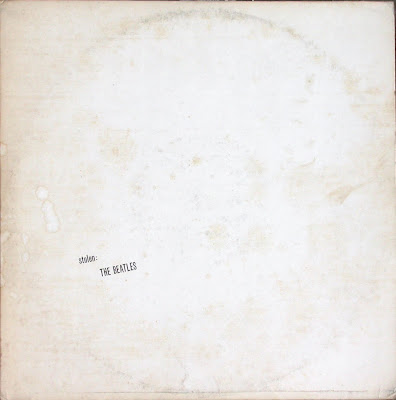
stolen: THE BEATLES (aka A Studio Recording)


Most of the earliest Beatlegs stemmed from the same sources: tapes of two acetates prepared by Glyn Johns, containing rough mixes of material from the "Get Back" sessions at Apple. Copies of the tapes were circulating during the last few months of 1969, particularly after broadcasts on several US "underground FM" radio stations in September.

By Christmas, the first generation of bootleggers had begun to press the material on vinyl, and the albums, packaged in plain white sleeves, were selling in head shops by January, 1970. The most famous, and possibly the earliest, was known as Kum Back, available in original and slightly modified knock-off forms within months.

These LPs, and others such as Dig It!, were based on "Acetate #1" (compiled January 30th, 1969). Material from "Acetate #2" (compiled ca. May 2nd) appeared around the same time on the untitled "Silver Album", so named due to its shiny cover. A couple of months later, Lemon Records came out with Get Back, an LP combining material from both acetates.

Note that all these albums were available prior to the official release of the Let It Be LP in May, leading the bootleggers to guess at the titles of many songs. Such was the case for the Catso Records release A Studio Recording, issued around March, and stamped on the cover (my copy, anyway) with stolen: THE BEATLES.

- Let It Be
- Get Back
- Don't Let Me Down
- I've Got A Feeling
- Dig A Pony

- Teddy Boy
- Two Of Us
- For You Blue
- Across The Universe

Power To The People!


Thanks to everyone who voted in the poll, particularly those who left appreciative comments about the blog.

A clear majority wants to see me continue with solo interviews, so that's what I'll do. But enough people want the return of vinyl Beatlegs for me to throw those in from time to time. I think an interesting way to approach it will be to combine the two chronologically. Since the Beatleg industry began just as the group was disbanding, it'll be fun to chart the black-market releases alongside the solo careers.

I'll begin with a look at the pre-breakup Beatlegs...

Monday, March 5, 2012

Another Poll


As many of you guessed, I reached the end of the road for Beatles interviews, at least the group years (through April 1, 1970). I do have a decent amount of solo interviews, but haven't collected them nearly as thoroughly as the group material, so there are undoubtedly some gaps. The good news is that I've transferred most of my collection to an external hard drive, so it's simple for me to grab files and upload them.

If I do carry on with solo interviews, there will be little in the way of illustrations and descriptions to go with the posts, merely because I don't have time to research everything. I will at least identify the dates and locations of the recordings as accurately as possible.

I still have over a hundred vinyl Beatlegs left to upload, so I could start posting those again. Or I could alternate the two, or move on to something else entirely. Please vote in the poll at the top left of this page and let me know what you'd like to see, and leave suggestions in the comments for this post.

And if you haven't already, please check out www.multiplusbooks.com and pick up copies of Beatlegmania Volumes 3 and 4!

Friday, February 24, 2012

When The Night Is Cloudy


The "Let It Be" single was finally released March 9th, 1970 in the UK, and two days later in the US. On the 11th, George Harrison sat down with BBC Radio's Johnny Moran for a lengthy and wide-ranging interview covering George's recent studio activity with Jackie Lomax, Billy Preston, Doris Troy, and the Radha Krishna Temple, as well as the Let It Be album and film, and the Beatles' future.

A short extract of the interview was aired on Scene And Heard March 15th, but the majority was aired March 30th as a special, The Beatles Today. Because Phil Spector was still mixing and overdubbing the Let It Be album, the BBC opted to air a couple of tracks ("Dig A Pony" and "Dig It") from Glyn Johns's unused version of the LP.

The Sentimental Journey album came out March 27th in the UK, and Ringo spent the last half of the month promoting it. On March 25th, he chatted with David Wigg for Radio 1's Scene And Heard, with the interview aired in two parts on the following two Sundays.

On the 29th, Ringo appeared live on LWT's Frost On Sunday to introduce a promo clip of the LP's title track. Two days later, he and DJ Pete Murray spun records live on Radio 2's Open House; Ringo also taped an open-ended interview discussing Sentimental Journey track-by-track for Radio Luxembourg, aired April 11th.

Thursday, February 23, 2012

Breathe


The second week of February, 1970, found all four Beatles busy with individual recording projects. George was in Trident Studios on the 7th producing and playing on a new Radha Krishna Temple single, "Govinda". Ringo was still occupied at EMI with sessions for Sentimental Journey, and from the 10th through the 20th, Paul was at Morgan Studios, supplementing his home recordings of the past few weeks with new material for his first solo LP, McCartney.

As ever, John was the busiest Beatle, promoting "Instant Karma! (We All Shine On)" while editing footage of the Montreal bed-in for a documentary feature scheduled (but not destined) to precede Let It Be in UK cinemas.

From February 8th through the 11th, Yoko's ex-husband Tony Cox was staying at Tittenhurst along with Kyoko, and was granted permission to videotape the couple's activities for yet another potential documentary. Although Yoko has held up any official release of the tapes, a sample of the February 9th video does circulate, albeit with tampered audio:


"Instant Karma" was promoted on Top Of The Pops February 5th with a hastily-assembled clip of footage mostly culled from the BBC's 24 Hours documentary of the previous December:


By February 11th, John and Yoko were in a BBC TV studio taping a performance (mimed apart from John's live vocal) of "Instant Karma" for use in future episodes of Top Of The Pops. Take 4 (in which Yoko holds up cue cards) was aired first, on the 12th, with take 3 (in which Yoko knits) following a week later.

A few days after it aired, John and Yoko fielded questions about their TV appearance, along with other listeners' queries, during an interview on Radio 1's Midday Spin, hosted by DJ "Emperor Rosko". The recording date is unknown, but it was most likely broadcast on the 21st of February.

Tuesday, February 21, 2012

The Shining


In a burst of inspiration the day after his return to London, John wrote a new song, "Instant Karma! (We All Shine On)", gathered a new Plastic Ono Band at EMI Studios, and recorded the number, all on January 27th, 1970. Ten days later, the single went on sale in UK shops, and John and Yoko set out on another round of publicity (although all their promotional tours were blending into each other by this point).

Around the 30th of January, they were interviewed by David Bellan for the BBC World Service radio show Profile. On February 4th, they held a ceremony on the roof of London's Black Centre, where they donated their shorn hair to activist Michael X. Media reaction was sparse, but ITV News did send Peter Sissons to cover the latest "Lennon stunt".

February 6th saw the couple participating in another interview with David Wigg for Scene And Heard, broadcast on Radio 1 February 15th. And on the 7th, they joined Michael X in taping an appearance on London Weekend Television's Simon Dee Show, aired the following night.

Monday, February 20, 2012

We Have Got To Get It Together


On January 20th, 1970 in Denmark, John and Yoko traded in their lengthy tresses for close-cropped haircuts. During a stopover in Paris on the way back to London six days later, they were interviewed for a Reuters newsreel about the new look and the imminent "Let It Be" single.

The same day, Ringo took a break from recording Sentimental Journey to promote The Magic Christian in America. He and Maureen flew to Los Angeles on the 26th, where a press conference was held at the airport. The following day, Ringo taped a guest appearance on NBC-TV's hit show Rowan & Martin's Laugh-In.

The movie premiered in Hollywood on January 29th, and Ringo made a quick trip to Las Vegas on the 30th to catch Elvis Presley's show at the International Hotel. At some point during his L. A. visit, Ringo filmed an interview with Sam Riddle for Get It Together, broadcast March 7th on ABC. He and Maureen flew to New York on February 1st, returning to London the next day.

Saturday, February 18, 2012

Year One A.P.


John and Yoko spent Christmas week, 1969, at home in Tittenhurst, ready to usher in Year One A.P. (After Peace). On the 26th or 27th of December, they recorded a message for Canadian radio, promoting the International Peace Festival and sending hope to listeners of the planned "peace network" of radio stations.

Around the same time, as a thank-you to Ronnie Hawkins, who had loaned them his house outside Toronto, John recorded a "Short Rap" and "Long Rap" plugging Ronnie's new single, "Down In The Alley". That Christmas, Canadian radio listeners were also treated to a sneak preview of "Let It Be", as heard on these airchecks from CKLW-AM in Windsor, Ontario.

By December 29th, John and Yoko were back at London Airport boarding a flight to Denmark. They would spend New Year's and most of January, 1970 visiting Yoko's daughter Kyoko at the Ålborg farmhouse where Yoko's ex-husband Tony Cox was staying. Recordings from this visit are covered in an earlier blog post.

Friday, February 17, 2012

Live Peace In Toronto, part 3


John and Yoko's advertising campaign for peace continued on December 20th, 1969 with a visit to the University of Toronto, where they were filmed by CBS-TV in a long conversation with author and communication theorist Marshall McLuhan. The footage survives but does not yet circulate widely; however, a follow-up interview with a CBS News reporter does exist.

At 10:15 that evening, John and Yoko appeared live on CBC-TV's Weekend, broadcast from their Toronto studio. Host Lloyd Robertson talked with the couple and Rabbi Abraham Feinberg about the planned Peace Festival.

On December 22nd, the Lennon entourage boarded a train for Montreal, where a press conference was held at the Château Champlain hotel. From there it was on to the nation's capital, Ottawa, for a meeting with Canadian prime minister Pierre Trudeau on the morning of the 23rd. As John told the press afterwards, the hour-long summit was fruitful in terms of communication, if nothing else.

That night, John and Yoko flew back to Toronto, where they spoke with rock journalist Ritchie Yorke before returning home to London for Christmas.

Thursday, February 16, 2012

Live Peace In Toronto, part 2


Day 2 in Canada (December 18th, 1969) was set aside for various reporters and journalists to visit John and Yoko at Ronnie Hawkins's farmhouse in Mississauga. They actually began the day by taping a message to fans in Japan, mostly spoken by Yoko in Japanese with John playing various riffs and songs on acoustic guitar in the background. This was released as one side of an extremely limited LP, Love And Peace, apparently issued by Yamaha.

CBC Television had a camera crew filming for several purposes. The first was an interview with Nick Steed and Ken Cavanaugh for the TV show CBC Weekday, aired that night. CBC was also producing a documentary, A Visit For Peace, which included another farmhouse interview along with footage of the previous day's press conference and John and Yoko riding a Motoski through the snow.

A reporter ("Bob") questioned John and Yoko the same day for an Associated Press newsreel, and yet another filmed interview at the farmhouse found John talking with a Canadian broadcaster about the promotional film for "Cold Turkey".

Wednesday, February 15, 2012

Live Peace In Toronto, part 1


The Lennons' last great push for peace took place in Canada the week before Christmas, 1969. On December 16th, they flew from London to Toronto and were driven to the home of Canadian rocker Ronnie Hawkins, who lent them his farmhouse as a base for their operations during the week.

The first event was a press conference on the 17th at the Ontario Science Center, where John and Yoko announced vague but ambitious plans for a three-day Peace Festival to be held at Mosport Park (a racetrack) in July 1970. Arguments with the promoter, John Brower, meant that the festival never took place, but the couple were optimistic about the prospects for "Year One A.P. (After Peace)". Here is a 55-minute composite recording of the press conference, from several sources.

That evening, John and Yoko welcomed Village Voice reporter Howard Smith to the farmhouse for a dinner-time interview covering dozens of topics: the "War Is Over" posters and peace festival, their recent trips to Greece and India, prospects for future Beatle tours, the MBE return, the Hanratty case, and more. The recording was broadcast on WABC radio in New York; as it lasts nearly 90 minutes, here it is in nine pieces:


Monday, February 13, 2012

If You Want It


The Plastic Ono Band's LP Live Peace In Toronto hit UK and US shelves on December 12th, 1969. John and Yoko promoted the release with an interview for South African radio; most likely on the same day, they participated in a track-by-track examination of the album with Radio Luxembourg's Tony Macarthur.

The latest component in their year-long advertising campaign for peace was unveiled December 16th, when billboards and posters appeared in 11 cities worldwide declaring WAR IS OVER! IF YOU WANT IT - HAPPY CHRISTMAS FROM JOHN & YOKO.

On the 15th, the couple explained the poster event to a Dutch reporter from AVRO-TV's Televiezer Magazine; the next day, they did likewise for a French newsreel crew.

The evening of the 15th, John & Yoko performed at a UNICEF benefit in the Lyceum Ballroom, backed by a Plastic Ono supergroup including George Harrison, Eric Clapton, Billy Preston, and most of the Delaney & Bonnie touring band. Their performances of "Cold Turkey" and "Don't Worry Kyoko" were professionally recorded and later released on Some Time In New York City, but here is a partial (and poor quality) audience recording of the concert.

Earlier on the 15th, Ringo had recorded a special appeal for the Wireless for the Blind Fund, to be aired Christmas morning on BBC 1's Kenny Everett's Christmas Show. For the second year running, Kenny had been given the thankless task of assembling a Beatles Fan Club Christmas Message from various tapes submitted independently by the now Fractured Four. Only John and Yoko seemed to put much effort into their contribution, and as a result, they dominate what would be the final such disc, shipped to fan club members on December 19th:


Friday, February 10, 2012

Hey Bulldog


On November 26th, 1969 at EMI, John, Yoko and friends had gathered to overdub yet another layer of cacophony to their 1968 recording "What's The New Mary Jane". The new mix, coupled with another Beatles reject dating back to 1967, "You Know My Name (Look Up The Number)", was scheduled for release on December 5th as a Plastic Ono Band single on Apple.

Whether John changed his mind or the other Beatles rejected the idea, the single was cancelled. Perhaps he was worried about a product glut, with "Cold Turkey", the Wedding Album, and Live Peace In Toronto all hitting the stores in an eight-week period. Also available as of December 12th was the long-delayed charity LP No One's Gonna Change Our World, featuring another Beatle leftover from 1968, "Across The Universe". Here is a December '69 aircheck of the song on WKBW in Buffalo (as the LP wasn't sold in the US, they were able to claim an "exclusive").

George spent the first half of December as guitarist on the Delaney & Bonnie & Friends tour across the UK and into Denmark. Several concerts were recorded professionally for release on an Atco LP, including the December 7th shows in Croydon. The MC's band introductions heard on the LP excises George's name, most likely for contractual reasons (he is credited on the sleeve as "Mysterioso"); here is the unedited introduction from the soundboard tape, including mention of George.

Meanwhile, Paul was keeping quiet at his home in London, contemplating his first solo LP, and Ringo was moving into a new house near Highgate. John and Yoko kept up their media blitz, calling for the reopening of the case of James Hanratty, hanged for murder in 1962. On December 10th, the Lennons posed for photos with Hanratty's parents and proselytized for peace in a filmed interview.

By far the most entertaining Lennon interview of 1969 was taped in early December for a radio documentary on the history of popular music, Pop Goes The Bulldog. John spoke at length and quite expertly with Don Chandler about the evolution of Beatle music, from skiffle, country, and R&B through Elvis and Little Richard, and up to John Cage and Stockhausen.